
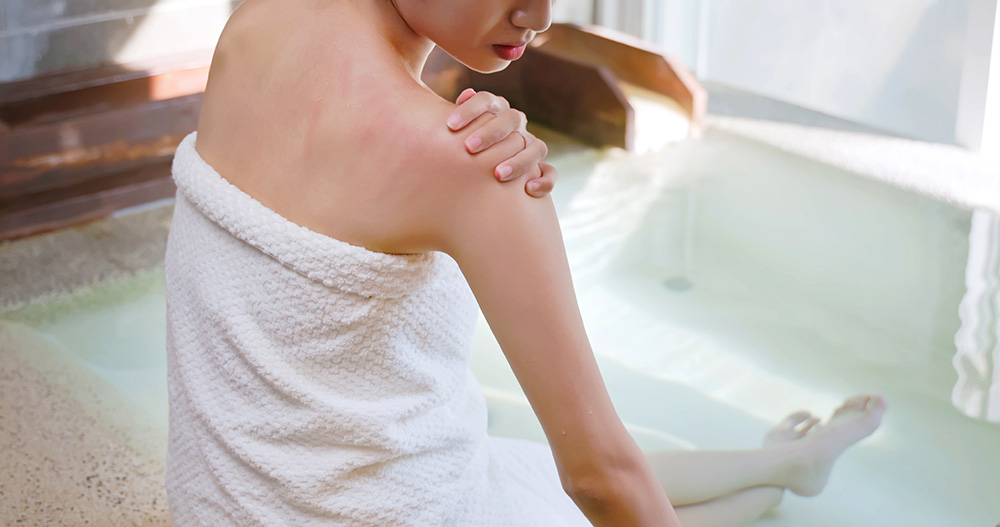
Hot tub folliculitis is a bacterial skin rash caused by Pseudomonas aeruginosa, a germ that thrives in warm, poorly maintained hot tub water. It comes with a frustrating built-in delay: the skin looks fine right after you get out of the water. No redness, no bumps, nothing at all. A day goes by, maybe two, and then red bumps start to pop up across the torso, the buttocks or the upper arms. At that point, the hot tub is about the last place most of us think to blame. That gap (sometimes a full 48 hours) is what makes it so hard to connect the rash back to where it all started.
Most hot tub rashes trace back to a single bacterium called Pseudomonas aeruginosa, which loves warm and wet environments and makes a poorly maintained hot tub just about the most welcoming place on earth for it.
Here, we go into what’s actually going on beneath the skin during an outbreak, why warm water turns out to be a perfect environment for bacteria to grow in and what you can do to protect yourself and make sure it doesn’t happen again.
If you have any concerns about a rash, simply walk into Emerald Coast Urgent Care, located in three convenient cities: Destin, Panama City Beach, and Inlet Beach Florida.
What Hot Tub Folliculitis Really Is
Hot tub folliculitis is an infection of the hair follicles, those little openings in your skin where each hair grows out from. A little irritation in those follicles is all it takes for them to get infected and once that happens they swell up into small red or pink bumps that can itch or feel sore and tender if you press on them.
Hot tub folliculitis is pretty easy to confuse with acne or a heat rash, all three can look fairly similar on the skin. With acne the issue is clogged follicles, oil and dead skin cells are the culprits there. A heat rash is different – it’s what you get when sweat gets trapped underneath the skin. Hot tub folliculitis is something else entirely, it’s a bacterial infection which puts it in a category all its own.
The bumps mostly show up on your torso, backside and legs – anywhere your skin was in contact with the water. You also get them in the folds of the skin or right underneath a swimsuit which can be especially uncomfortable. Those areas are already pretty sensitive on their own and a rash there on top of everything else doesn’t help.
Regular hot tub and spa users run into this. It’s actually a fairly well-documented skin reaction and plenty of standard users have had it at least once, most of them with no idea of what it even was.
Why Pseudomonas Aeruginosa Loves Your Hot Tub
Heat and chlorine don’t get along well together. The warmer your water is, the faster chlorine burns off and loses its ability to fight bacteria, and in a hot tub, that temperature is always working against you. A cold pool can hold onto its chlorine far longer than a spa ever could, which is why a sanitization schedule that works just fine for a pool will fall short in a hot tub. When chlorine levels drop low enough, the bacteria get plenty of room to multiply much faster.
The CDC has actually linked Pseudomonas aeruginosa to multiple outbreaks at hotels, resorts and public spas over the years. What makes this especially hard to pin down is that the water sources in question looked fine. The bacteria can spread and cause actual harm long before anyone has a reason to investigate, it’s a big part of what makes it so hard to stay ahead of.
The warm water that makes a hot tub feel so nice is exactly what gives Pseudomonas the conditions it needs to grow. High temperatures, heavy bather loads and a water chemistry that breaks down fast, together, those conditions create a perfect setup for bacteria to move in. Public hot tubs and hotel spas are usually the bigger concern here and it makes sense, they see non-stop heavy use and the water chemistry can drift pretty far off between maintenance checks.
A pool has a much easier time staying clean, the water runs cooler and the chlorine holds up much longer at lower temperatures. A hot tub is the opposite situation. The heat burns through your sanitizer much faster and every person who gets in can add more contaminants to the water, and when the maintenance schedule isn’t keeping pace with all that, the window for bacterial growth opens up quickly.
The Red Bumps and Where They Show Up
The rash from hot tub folliculitis is pretty easy to find once you know what to look for. The small red bumps are the main sign – they’ll usually itch, feel a little tender to the touch and can start to fill with pus within a few days. Where the bumps show up matters too. These bumps don’t scatter randomly across your skin – they usually cluster right along the areas where your swimsuit was pressed against your body.
That detail is actually a pretty telling clue. Your swimsuit fabric traps warm bacteria-filled water right against your skin for the entire time that you’re soaking and it gives the bacteria a pretty direct path into your hair follicles. If your bumps are mostly around your thighs, chest or anywhere else that the suit was covering, that’s a strong sign of what you’re probably up against.
The timing is one of the harder parts to pin down. The rash won’t show up as you’re still in the water, it can take anywhere from 12 to 48 hours to develop after you get out. That window makes it very easy to lose track of the connection between the rash and the hot tub, it’s also the case if a day or two has already gone by since you were last in it.
A rash in the areas covered by your swimsuit is also worth seeing a doctor about, and if part of you feels a little embarrassed or worried about it, that’s a pretty normal reaction. Skin problems in those private areas just aren’t the most comfortable to bring up, and patients wait far too long before looking into it. But even so, you already have plenty to work with. Having a rough idea of where the bumps are and when they first showed up gives you a decent place to start working backward from, and with something like this, that sort of head start counts for quite a bit.
How Long Does the Rash Take to Heal
The news for most healthy patients is that hot tub folliculitis clears up on its own within about 7 to 10 days. Your immune system takes care of the bulk of it and in most cases you won’t need any medical treatment at all. With that in mind, you still have a few steps that you can take at home to make that waiting period more comfortable.
A warm compress on the irritated skin can help with the itch and bring down some of the soreness. Past that, a clean and dry surface gives your skin a chance to heal at its own pace. Loose-fitting clothing is a smart idea as well – anything tight will rub against the bumps and make everything quite a bit worse.
The rash will itch and the urge to scratch it will be strong, but do your best to resist it. Scratching hard enough to break the skin open gives you an entry point for a secondary infection and can stretch your recovery out by quite a bit. A cold compress or an over-the-counter anti-itch cream can help in those moments. Either one will quiet that urge when it gets to be too much – and it will get to be too much at some point, so it’s helpful to try to have one on hand.
The wait feels even more frustrating when the rash pops up somewhere visible or is plain uncomfortable. As a general guideline: if the rash hasn’t improved after 10 days, or the bumps are starting to look worse instead of better, that’s the point to see a doctor. Most cases never get there, though. In most situations, the body has already started to work on it, it just needs a little more time to catch up.
Keep Your Hot Tub Water Clean and Safe
Of everything that goes into keeping hot tub folliculitis from coming back, water chemistry is far and away the part that matters most. The bacteria responsible for it (Pseudomonas aeruginosa) are always looking for an opportunity and even a slightly off water balance is enough to give them one.
PH and chlorine are the two numbers that matter most in your water – pH needs to sit between 7.2 and 7.8 and chlorine needs to sit somewhere in the 3 to 5 parts per million range. Neither of these numbers is arbitrary – they’re built to work together to keep your water hostile to bacterial growth. A pH that creeps too high will actually rob your chlorine of its ability to sanitize the water the way it should – even when the chlorine level itself reads just fine.
The simplest habit to use is a quick water test two to three times a week. A basic test strip takes about 30 seconds and it’ll tell you right where your levels stand. The mistake I see most is waiting until something already looks wrong before running a test, with no set schedule behind it, by that point, the bacteria have already had more than enough time to multiply.
Filter maintenance is the other piece that usually gets pushed aside. A dirty filter just cycles contaminated water right back into the tub – which undoes everything your chemicals are working to accomplish. A quick rinse every few weeks and a full chemical soak once a month is all it takes. The time commitment is minimal and the payoff for your water quality is well worth it.
Every three to four months, it’s worth doing a full drain and refill of the tub. Before the fresh water goes back in, take a few minutes to wipe down the inside of the tub, it doesn’t add much time at all and it clears out any residue or buildup that your day-to-day chemical maintenance just can’t take care of on its own.
Stay Safe in a Public Hot Tub
A public hot tub is a very different experience from the one in your backyard. At hotels, gyms and resort spas, you have no say in how that water is treated or tested, which matters quite a bit before you get in.
A hot tub that sees heavy traffic tends to be riskier. More bathers means more bacteria in the water and it puts a much heavier demand on the sanitizing chemicals. A packed resort hot tub on a Saturday afternoon is an example of this, water quality can drop pretty fast under those conditions.
The easiest step that you can take is a quick shower right after you get out. A rinse will wash off any bacteria that settled on your skin as you were in the water. Then get out of your wet swimsuit, a damp swimsuit that’s held against your skin for too long just gives bacteria more time to hang around.
One more step before you get in, ask the staff about their maintenance schedule. It will seem a little awkward at a higher-end resort, everything around you is meant to make you feel like you should just relax and trust the place. It’s a fair question and any well-run facility will have no problem answering it. If they can’t tell you when the water was last tested or treated, then that answer by itself tells you quite a bit.
Public hot tubs don’t have to be something that you stay away from altogether. A little awareness and a couple of small habits on the way out can make quite a difference.
Walk In Today and Get Seen
A hot tub rash feels a bit stressful until you know what’s going on. A quick water quality check before you get in, a rinse when you step out and a bit of attention to how your skin feels afterward. Those three small habits add up to a much safer experience every time. Hot tubs are still one of the best ways to unwind and a little extra awareness does go a long way toward keeping them that way.
With that said, if your rash isn’t improving the way it should, or something about your skin’s response just doesn’t feel right, there’s no actual reason to sit home and wait it out alone. A small skin issue shouldn’t have to drag on for a week. If your symptoms refuse to go away, look like they’re spreading or seem to be worse, come and see us.
At Emerald Coast Urgent Care, you don’t need an appointment and all three of our locations in Destin, Panama City Beach and Inlet Beach are open every day for walk-ins. We’ll get you in fast, give you actual answers and help you start feeling better, so you can get back to actually enjoying yourself. Come in any time we’re open and we’ll take great care of you.