
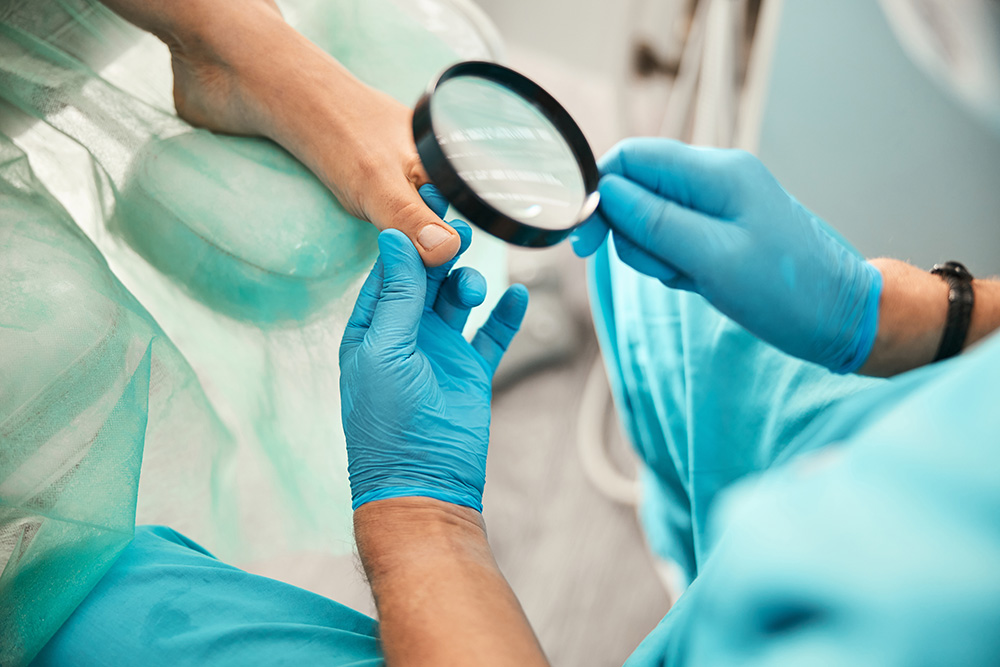
If one corner of your big toe has started to throb every time you put on a shoe, an ingrown toenail is the likely cause. It happens when the edge of the nail grows down into the skin instead of over it, and while many cases respond well to home care, some need more than that to heal properly.
Emerald Coast Urgent Care sees plenty of sore toes, particularly through sandals season here on the coast, and we can get you looked at without a long wait. Our walk-in clinics in Destin, Inlet Beach and Panama City Beach are open daily, so you don’t need an appointment to come in.
Ingrown nails, explained
An ingrown toenail develops when the edge or corner of the nail grows down into the soft skin beside it instead of over the top. That pressure on the surrounding tissue brings on the pain and swelling, and an infection can set in from there. Any toe can develop one, though the Cleveland Clinic says that the big toe is the most common spot.
The skin around a nail is soft and quick to react, so even slight pressure from the edge can hurt, and sometimes the skin grows over the nail in response. Catching it early matters, since a nail that hasn’t broken the skin is much easier to manage than one that has.
The causes of ingrown toenails
Most of the time, an ingrown nail happens because of how you trim your nails. If you cut them too short or round the corners, the edge will curl downward, causing it to grow into the skin. Shoes that cram your toes exert continuous pressure on the nail, causing it to grow in the wrong direction.
A couple of causes are easier to overlook. Some people are simply born with nails that curve more than average, which makes recurring ingrown nails likelier no matter how careful the trimming.
And here on the Emerald Coast, where feet spend a lot of time in sandals, an injury is a common trigger worth keeping in mind.
Footwear and nail-trimming habits
Your shoes have a direct effect on nail health, so look for a wide toe box that lets your toes sit without crowding against the nail. When you trim, cut straight across rather than curving to match the toe, and keep the nail even with the tip of your toe instead of cutting it too short.
Injury and genetic factors
Sometimes an ingrown nail has nothing to do with trimming or footwear. A stubbed toe or something dropped on your foot can change how the nail grows back, pushing it into the skin beside it.
If your nails curve or fan outward naturally, you’re more likely to have problems with ingrown nails — even when you’re doing everything right, according to the American Academy of Orthopedic Surgeons.
Ingrown toenail symptoms
The earliest sign of an ingrown toenail is usually tenderness along one side of the toe, right where the nail meets the skin. It can be subtle at first, sometimes only noticeable when a sock or shoe presses against it, but it’s your body’s first warning sign that something’s off.
From there, the skin alongside the nail often turns red and puffy as the tissue becomes inflamed, and the area can feel warm to the touch. Left alone long enough, the swelling builds and a little fluid or pus might appear, which usually means an infection has taken hold. Pain that had been mild can turn sharp at that stage and get much harder to ignore.
Signs of an infected ingrown toenail
Pus is the clearest sign that an infection has set in. A yellowish or white discharge, often near the nail’s corner and sometimes with a bad smell, is typical. When that develops, home remedies are no longer suitable.
Other signs to take seriously include warmth and redness spreading to the toe. It’s normal to have some tenderness, but skin that feels hot or redness that keeps expanding suggests your body is fighting something it can’t clear on its own. Infections in the feet can move faster than people expect, so it’s better to have it looked at than to wait.
How to treat an ingrown toenail at home
For a mild case, a warm water soak is the best place to start. 15 to 20 minutes at a time, three or four times a day, softens the skin and brings down the swelling. After a soak, you can gently tuck a small piece of clean cotton or waxed dental floss under the edge of the nail to lift it slightly, which encourages it to grow out over the skin rather than into it.
A few other things help while you wait for the nail to grow out:
- An over-the-counter anti-inflammatory medicine, like ibuprofen, for the pain.
- A medicated ingrown-toenail cream from the pharmacy to calm the redness down.
- Using open-toed shoes or sandals if you can.
Soaking and softening
Mixing a little Epsom salt into the soak can ease the swelling further, though plain warm water works fine on its own. Consistency counts for more than duration, so a few short soaks across the day beat one long one.
When home remedies are enough
Home remedies are effective for mild toe discomfort, provided the skin is normal and shows no signs of expanding redness. What really decides it is whether the nail has broken the skin, since once it has, clearing it at home gets a lot less likely. If a few days of regular care aren’t helping, that’s your sign it needs to be evaluated.
When to get an ingrown toenail removed
A nail that keeps coming back is the clearest case for removal, since a quick in-office procedure can finally break the cycle in a way home care never quite does. Anyone with diabetes or poor circulation should be especially cautious about waiting, too.
What to expect during ingrown toenail removal
The procedure is straightforward and usually takes under half an hour. We’ll start by numbing the toe with a local anesthetic. Once it’s numb, we remove the portion of the nail growing into the skin, and for recurring cases, we can treat the nail root so that edge doesn’t come back the same way. Afterward, we’ll bandage the toe and you can head home the same day.
The numbing wears off over a few hours and some soreness is normal, though over-the-counter pain relief usually handles it. We’ll walk you through keeping the area clean while it heals, which generally takes a couple of weeks.
Frequently asked questions
Can an ingrown toenail go away on its own?
In mild cases caught early, yes. If the nail hasn’t broken the skin and there’s no sign of infection, soaking the foot a few times a day can relieve enough pressure to let it grow out. Once swelling, warmth or discharge appear, it’s unlikely to clear without professional care.
How long does ingrown toenail removal take?
Usually under 30 minutes, and you can walk out the same day. Some soreness sets in as the numbing fades, but over-the-counter pain relievers can usually handle it. Full healing takes about two weeks.
How can I prevent ingrown toenails?
Proper nail care and choosing appropriate footwear are the two most important habits. Trim straight, align the nail with your toe’s tip, and choose footwear with a broad toe area.
Is ingrown toenail removal painful?
The procedure itself isn’t painful. You might feel slight pressure when the nail is taken out because of the local anesthetic. There’s usually some soreness once the numbness wears off, but most people find it manageable with standard pain relief.
Get ingrown toenail treatment at Emerald Coast Urgent Care
It’s better to address a sore toe early on, before it leads to a week of discomfort. If yours has moved past mild tenderness into swelling, warmth or discharge, or you keep landing back in the same spot, our team can look it over and get you the right treatment without a long wait. If a nail needs to be removed, we can usually do it the same day.
Emerald Coast Urgent Care has walk-in clinics in Destin, Inlet Beach and Panama City Beach, open daily with no appointment needed. Stop into whichever location is closest and we’ll help you get back on your feet.